





The True Cost of Poultry House Downtime and How Scrubber Dryers Can Reduce It
At a Glance
Poultry house downtime drives labour, chemical and welfare costs, with inefficient cleaning times and unreliable equipment often contributing to these costs. Mechanised scrubber dryers shorten cleaning cycles by combining scrubbing and water recovery in one pass. Selecting the correct machinery, ensuring parts support, and effectively implementing staff training reduces turnaround times and keeps production consistent.
What Causes Poultry House Downtime and How Long Should It Last?
Keeping birds healthy and production steady comes down to important but straightforward measures, such as keeping floors clean and controlling dust. When a poultry house sits idle due to cleaning or contamination, the cost is more than just lost eggs or slower growth. It is labour overtime, extra cleaning materials, stress on birds, and a higher risk of diseases. So what causes downtime, how does it impact the bottom line, and how can the right scrubber dryer reduce poultry house downtime?
Downtime happens for multiple reasons. Regular deep cleans, litter changes, pest control, and occasional disease controls can all lead to downtime. Poor planning and unsuitable equipment decrease efficiency, meaning a job that would usually take half a day can stretch to a day or two.
Planned downtime for cleaning is an important part of maintaining hygiene and welfare requirements. However, the goal should always be to do a fast, thorough cleanup with minimal stress to animals and fewer disruptions to staff. The reality is that many farms still rely on manual scrubbing and pressure washers, and they continue to use wheelbarrows to apply disinfectants. This more manual method slows things down and costs more in labour. Leaking machines, brushes that need contact recharging or batteries that do not last a full shift also reduce efficiency. However, these problems are avoidable if the right machine and service plan are in place.
The Financial and Welfare Impact of Downtime in Poultry Farming
Downtime impacts both direct and indirect costs. Direct costs are things you can put straight into a spreadsheet, like waste feed, reduced production, extra labour and higher utility bills during extended cleaning windows.
Indirect cost builds up quickly as longer downtime increases the time birds are stressed, and stress reduces feed conversion and growth. Likewise, poorly cleaned floors increase pathogen load, leading to higher medication costs or even culling in severe cases.
If cleaning takes an extra two hours every cycle and that forces an overtime shift once a week, those wages add up over time. It also increases chemical usage and the need for replacement parts.
Conversely, operators who switch to mechanised scrubber dryers regularly report faster turnaround between flocks and fewer return visits by service teams.
Why Are Scrubber Dryers Essential for Modern Poultry Houses
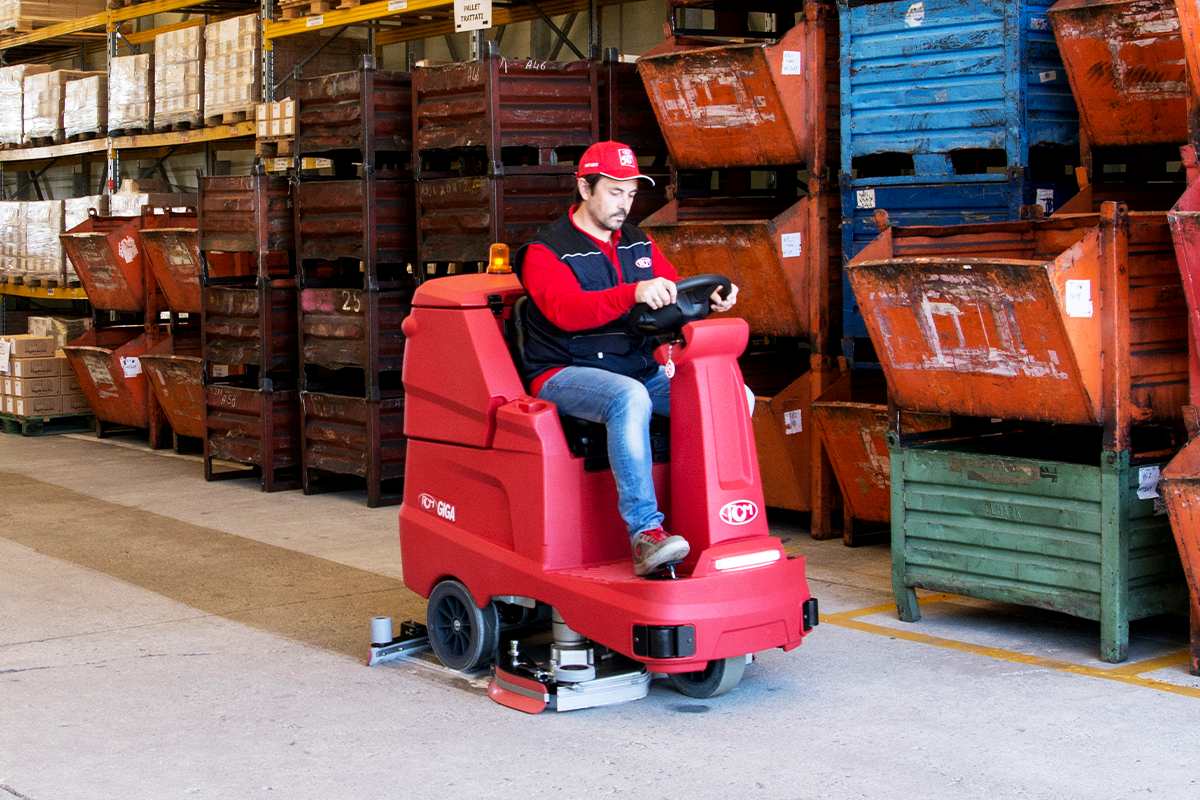
Scrubber dryers remove the need for inefficient manual cleaning methods. They mop, scrub and recover dirty water in a single pass. This multi-functional approach reduces manual labour, cuts chemical usage, and reduces downtime.
There are several scrubber dryer benefits for poultry farms in the UK, including improved cleaning quality and smoother maintenance processes. However, it is crucial to choose machines that handle dusty litter and narrow passageways conveniently.
A compact ride-on or walk-behind scrubber with a 700 to 900 millimetre brush width, a 50 to 70 litre solution tank and multi-hour run time is suitable for most poultry houses. It is a sensible spec range that balances coverage with mobility.
At Euromec we supply industrial cleaning machines, including RCM scrubber dryers, and offer after-sales support and spare parts. We are an authorised UK distributor for brands such as RCM, Iseki, Honda and Stiga. We place real emphasis on service and parts because that’s what uptime depends on.
How To Choose and Implement The Right Scrubber Dryer
Choosing the right scrubber dryer depends on the process environment, performance requirements, and compliance obligations. These key steps help guide specification and selection:
1. Assess the area and workflow – Measure aisles and door widths and note any low beams or obstructions, in addition to calculating how many hours a day the house needs cleaning.
2. Match specs to needs – Consider brush width, tank capacity, runtime and brush type. For narrow tunnels, a 700 millimetre walk-behind model can be an effective choice. For larger service yards, a ride-on with a 900 millimetre brush width and a 70 litre tank reduces passes.
3. Check service and parts – Choose a supplier that stocks spares and offers rapid after-sales service. At Euromec, we provide authorised distribution for RCM and other brands. We highlight after-sales and parts as a core part of the offer.
4. Plan training and maintenance – A machine saves time only if the staff knows how to use it and maintain it correctly. Short, regular training sessions combined with a simple checklist keep machines running.
Implementation is practical work, so request a short demo, time the difference between manual cleaning and the scrubber dryer and capture key metrics to make the right decision.
Talk to Euromec About The Right Scrubber Dryer For Your Farm
If you are running a poultry unit and you want to cut downtime, talk to our team at Euromec today. We offer effective ways to reduce poultry house downtime with our range of scrubber dryers. We also supply machine parts and offer comprehensive after-sales service in the UK.
To get a tailored quote, contact Euromec and ask for a demo of RCM scrubber dryers today. You may also book a short on-site demo and ask for a service plan that includes spare parts and training.
Speaking with the Euromec team allows you to review performance data and system specifications in detail, helping you select equipment that supports effective maintenance, reduces cleaning time, and keeps poultry operations running efficiently.